Source Magnetic Core Drill Machine for Building, Industrial, and Construction
Explore 30 magnetic core drill machine listings from verified Chinese manufacturers. Buyers can compare specifications like drilling range, magnetic adhesion, and power ratings to find the right tool for building, industrial, and construction applications.
Key considerations
Products List




Comprehensive Sourcing Guide
Strategic Sourcing Guide for Magnetic Core Drill Machines
Understanding the Magnetic Core Drill Market and Product Classification
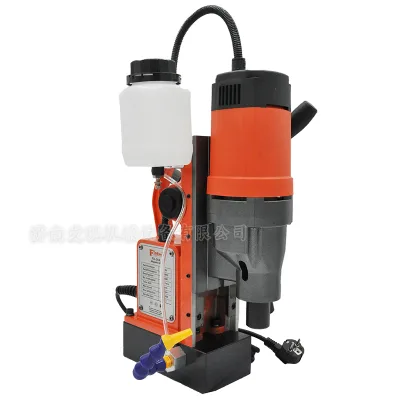
The global market for magnetic core drill machines is driven by the demand for high-precision, portable drilling solutions in the construction and industrial sectors. These machines, often referred to as electromagnetic drills, are designed to anchor securely to ferromagnetic surfaces, allowing operators to perform drilling tasks without the need for clamping or complex setup procedures. The product classification within this category is diverse, ranging from standard impact drills to specialized vertical drilling machines. Buyers must first distinguish between the general "Magnetic Drill" classification and specific structural variations such as "Canines Style" impact drills or "Vertical Drilling Machine" configurations.
The core functionality relies on a powerful magnetic base that adheres to the workpiece. In the current supply landscape, observed magnetic adhesion capabilities vary significantly between models. Some units demonstrate a magnetic adhesion force of 11,000 Newtons, while others are rated at 8,500 Newtons. This variance directly impacts the stability of the machine during high-torque operations, particularly when drilling into thick steel plates. The structural design is typically "Round" or "Vertical," with a layout that ensures the spindle aligns perfectly with the drilling axis. Understanding these fundamental classifications is the first step in narrowing down the supplier pool to those offering equipment that matches the specific operational requirements of the buyer's projects.
Technical Specifications and Performance Parameters
When evaluating magnetic core drill machines, technical specifications serve as the primary filter for suitability. The drilling range is a critical metric, with observed capabilities spanning from 13mm to 16mm in standard configurations, though some specifications indicate a broader hole diameter capacity of less than 50mm depending on the accessory kit used. The rated voltage for these machines is typically flexible, accommodating 110V, 220V, or 240V inputs, which is essential for international procurement where power grids differ. Similarly, the rated frequency is generally standardized at 50-60Hz to ensure compatibility with global power supplies.
Power consumption and speed are equally vital. Input power ratings observed in the market include 880W, 1100W, and up to 1700W models. Higher wattage generally correlates with the ability to drill through denser materials or sustain continuous operation. The no-load speed varies by model, with observed ranges including 680 r/min, 790 r/min, and 650 r/min. Some advanced configurations offer a variable speed range of 0-650 r.p.m., allowing operators to adjust the rotation speed based on the material hardness and the diameter of the drill bit. The spindle taper is another crucial specification, with Mt2 being a common standard observed in the supply chain. Additionally, the maximum travel of the spindle, often around 140mm, determines the depth of the hole that can be drilled in a single pass without repositioning the machine.
| Specification Parameter | Observed Range / Common Values |
|---|---|
| Magnetic Adhesion | 8,500N to 11,000N |
| Rated Voltage | 110V / 220V / 240V |
| Rated Frequency | 50-60Hz |
| Input Power | 880W, 1100W, 1700W |
| No-Load Speed | 650 r/min to 790 r/min |
| Max Drilling Capacity | 13mm to 16mm |
| Spindle Taper | Mt2 |
| Max Travel | 140mm |
Compliance, Certification, and Safety Standards
Ensuring that a magnetic core drill machine meets international safety and quality standards is a non-negotiable aspect of B2B procurement. The supply chain for these machines frequently references the CE marking, which indicates conformity with health, safety, and environmental protection standards for products sold within the European Economic Area. In addition to CE, some suppliers provide RoHS certification, ensuring that the product is free from specific hazardous materials. For manufacturers claiming higher quality assurance, ISO9001 certification is often cited, signifying that the production process adheres to international quality management standards.
Buyers must verify these certifications directly rather than relying on marketing claims. The presence of a machinery test report is another indicator of a supplier's commitment to quality control. This document typically details the results of performance tests conducted on the specific unit or batch, providing objective data on the machine's capabilities. When evaluating a supplier, procurement teams should request copies of these certificates and test reports to confirm that the equipment meets the regulatory requirements of the destination market. It is important to note that while CE is a common standard observed in the product data, the specific scope of certification (e.g., whether it covers the entire machine or just specific components) must be clarified with the supplier.
Cost Drivers and Pricing Structures
The pricing of magnetic core drill machines is influenced by a combination of technical specifications, build quality, and the level of customization offered. The observed price range in the market spans from approximately $100 to $1,985 USD, reflecting the diversity of the product lineup from entry-level models to heavy-duty industrial units. Several factors drive these costs. First, the power rating is a significant determinant; a 1700W model will typically command a higher price than an 880W unit due to the larger motor and more robust internal components. Second, the magnetic adhesion force contributes to the cost, as stronger magnets require more material and engineering precision.
Customization availability is another cost driver. Suppliers that offer "Canines Style" structures or specific packing options like "Wood Case" versus "Carton Box" may adjust their pricing accordingly. The "Wood Case" option, often used for heavy machinery to ensure safe transport, usually incurs a higher cost than standard plastic bag or carton packaging. Furthermore, the inclusion of after-sales services, such as video technical support, can influence the overall value proposition and price. Buyers should also consider the Minimum Order Quantity (MOQ), which ranges from 1 to 10 units. While single-unit purchases are available, bulk orders often unlock better pricing tiers, though the specific discount structures are not publicly standardized and must be negotiated directly with the supplier.
Typical Applications and Operational Versatility
Magnetic core drill machines are primarily designed for applications in the building and industrial sectors. Their ability to drill precise holes in steel structures, beams, and plates makes them indispensable for construction sites, shipbuilding, and heavy machinery maintenance. The "Vertical" layout and "Artificial" controlling mode allow for manual operation that provides the operator with direct feedback and control, which is crucial for maintaining accuracy in difficult-to-reach or overhead positions. The "High Precision" classification of these machines ensures that holes are drilled with minimal deviation, reducing the need for rework.
The versatility of these machines is further enhanced by their ability to handle various drilling ranges. Whether the task requires a 13mm hole for a specific bolt or a 16mm hole for a larger anchor, the machine's adjustable speed and power settings allow it to adapt to the specific requirement. The "Impact Drill" classification suggests that these machines can also handle materials that require a hammering action, although the primary function remains core drilling. The "New" condition of the products ensures that buyers receive equipment with full operational life, and the "Manual" automatic grade indicates that the machines rely on human skill for operation, which is often preferred in complex environments where automation might be limited by space or power constraints.
Supplier Evaluation and Quality Control Protocols
Evaluating a supplier for magnetic core drill machines requires a rigorous approach to quality control and service capability. Buyers should prioritize suppliers who provide a "machinery test report" and offer "Video technical support" for after-sales service. These features indicate a supplier that stands behind their product and is willing to assist with troubleshooting and operational guidance. The "Brand Name" associated with the machine, such as "Bochi" or "Findmctools/Dexi," can also serve as a proxy for reputation, though buyers should verify the brand's history and market presence independently.
Quality control should extend to the physical inspection of the product upon delivery. The "prod_packing" method, whether "Carton Box," "Plastic Bags," or "Wood Case," plays a critical role in protecting the machine during transit. A "Wood Case" is generally preferred for high-value or heavy equipment to prevent damage from impacts or moisture. Additionally, the "Condition" of the product must be verified as "New" to ensure that no prior usage has degraded the performance of the motor or the magnetic base. Buyers should also check the "Place of Origin," with "Zhejiang, China" being a noted manufacturing hub, to understand the logistical implications of the supply chain.
Long-Term Procurement and Maintenance Considerations
Long-term procurement success depends on understanding the warranty and maintenance requirements of the magnetic core drill machine. A standard warranty period of 1 year is commonly observed in the market, providing a baseline for protection against manufacturing defects. However, buyers should negotiate for extended warranty terms if the volume of purchase is significant. The "core components" of the machine, such as the engine, are critical to its longevity. Ensuring that these components are sourced from reputable manufacturers can reduce the frequency of breakdowns and the cost of spare parts.
Maintenance is another key consideration. The "Controlling Mode" being "Artificial" means that the operator plays a significant role in the machine's lifespan. Proper training on how to handle the "Vertical Drilling Machine" and manage the "No-Load Speed" settings is essential to prevent premature wear. Buyers should also consider the availability of spare parts, such as drill bits and spindle components, which are often sold separately. The "Dimension" of the machine, typically around 590420190mm, affects storage requirements, and buyers should ensure they have adequate space for the equipment when not in use. By focusing on these long-term factors, procurement teams can ensure that their investment in magnetic core drill machines yields a high return on investment over the life of the equipment.
FAQs
What is the magnetic adhesion force of these drills?
The magnetic adhesion force varies by model, ranging from 8,500 Newtons to 11,000 Newtons. This force ensures the machine anchors securely to ferromagnetic surfaces during high-torque drilling operations without requiring external clamps.
Can the machine operate on different voltage standards?
Yes, the rated voltage is flexible and typically supports 110V, 220V, or 240V inputs. This adaptability allows the equipment to function reliably in various international power grid environments with a standard frequency of 50-60Hz.
Which drilling range capacity does the machine offer?
Standard configurations support drilling ranges of 13mm to 16mm, with some models capable of hole diameters under 50mm depending on accessories. The maximum drilling capacity is specifically noted as 16mm for heavy-duty applications.
How is the spindle speed controlled during operation?
The machine features a no-load speed ranging from 650 to 790 r/min, with some models offering a variable range of 0-650 r.p.m. This allows operators to adjust rotation speeds based on material hardness and specific drilling requirements.
What certifications ensure safety and quality compliance?
Products commonly carry CE and RoHS certifications, with some manufacturers also providing ISO9001 certification. These standards confirm conformity with international safety regulations and quality management processes for the manufacturing of the machinery.
Which packaging options are available for shipping?
Packaging options include carton boxes, plastic bags, or heavy-duty wood cases depending on the order requirements. The wood case option is often selected for high-value units to ensure safe transport and protection against impact.